There are few places in Ushuaia where a single walk takes you through so many of the landscapes that make the End of the World unique.
On the hike to Laguna Esmeralda you cross Andean Patagonian forest, peat bogs, open valleys, beaver ponds and mountain terrain. As you walk, the peaks and hanging glaciers appear as part of the scenery. And it all ends in front of a lake of glacial origin.
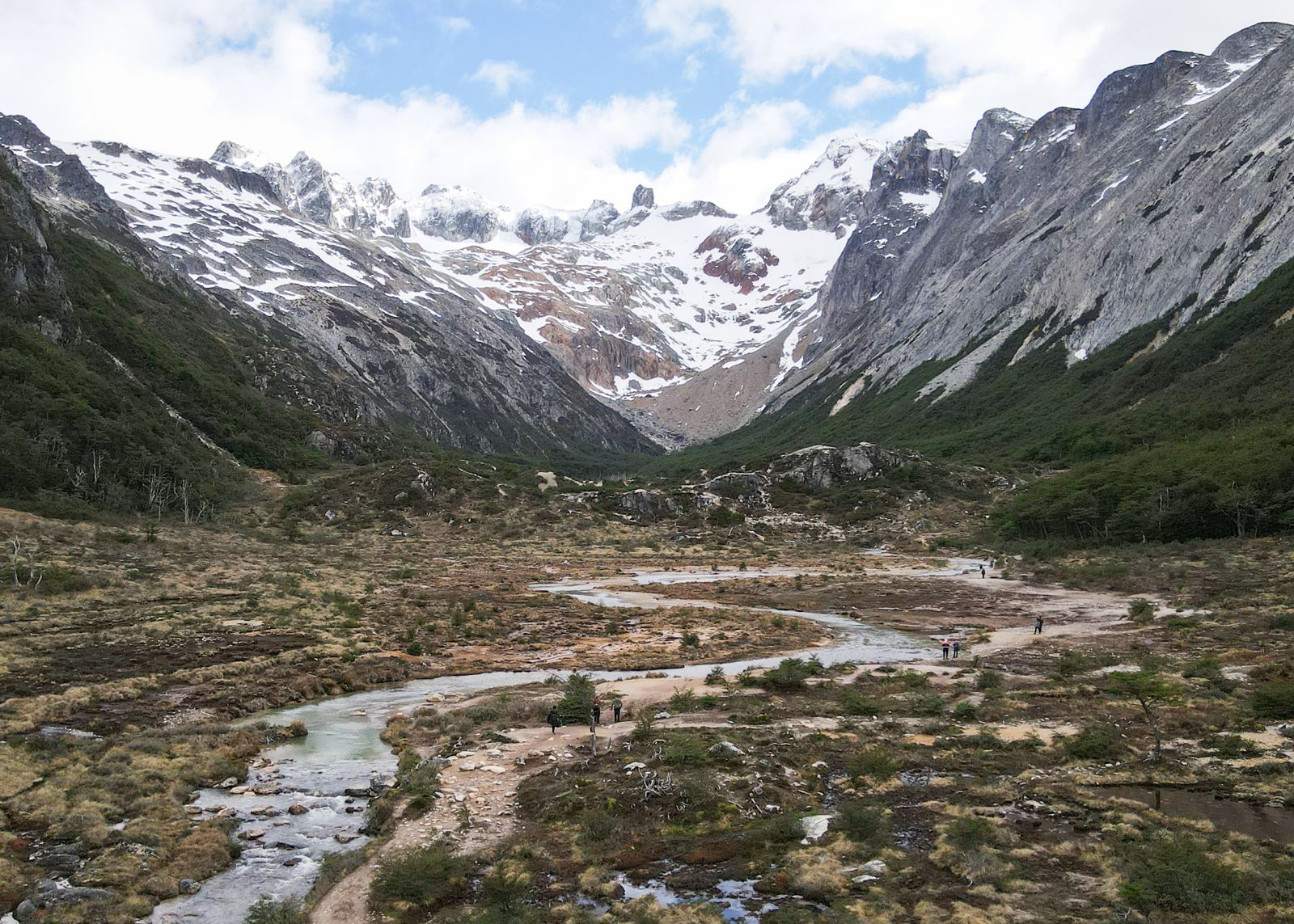
There is something else that makes this hike special: Laguna Esmeralda changes enormously depending on the time of year and the conditions of the day. The same trail can be a completely different experience in summer, autumn, winter or spring.
That is why, rather than talking about a single "difficulty level", this guide explains what the hike is really like, what conditions you may find and what you need to keep in mind before doing it.
Laguna Esmeralda in numbers
- 📍 From Ushuaia: about 18 km
- 📌 Trailhead: Laguna Esmeralda trail parking area
- 🥾 Distance: 9 km round trip
- ⏱️ Duration: 4 to 5 hours at an easy pace, with stops
- ⬆️ Elevation gain: around 220 m
- 🧭 Level: depends on the season and the state of the trail
- 🌲 Landscapes: Andean Patagonian forest · peat bog · valley · beaver ponds · mountains · glaciers
- 🎟️ Access: free
- ❄️ Open: all year. The lake is frozen from May to early November
In this guide
- Where is it and how to get there?
- What makes this hike special?
- What is the trail like?
- How does it change through the year?
- The terrain: mud, peat bogs and conditions
- What clothing and gear do I need?
- Can you hike it on your own?
- Frequently asked questions
Where is Laguna Esmeralda and how do you get there?
Laguna Esmeralda is about 18 km from downtown Ushuaia, along National Route 3 towards Tolhuin. It sits in the Tierra Mayor Valley, surrounded by mountains of the Andes.
The trail starts at the trailhead parking area, right off the road. From there you walk into the valley until you reach the lake, at the foot of the mountain. Above the lake you can see the Ojo del Albino glacier.
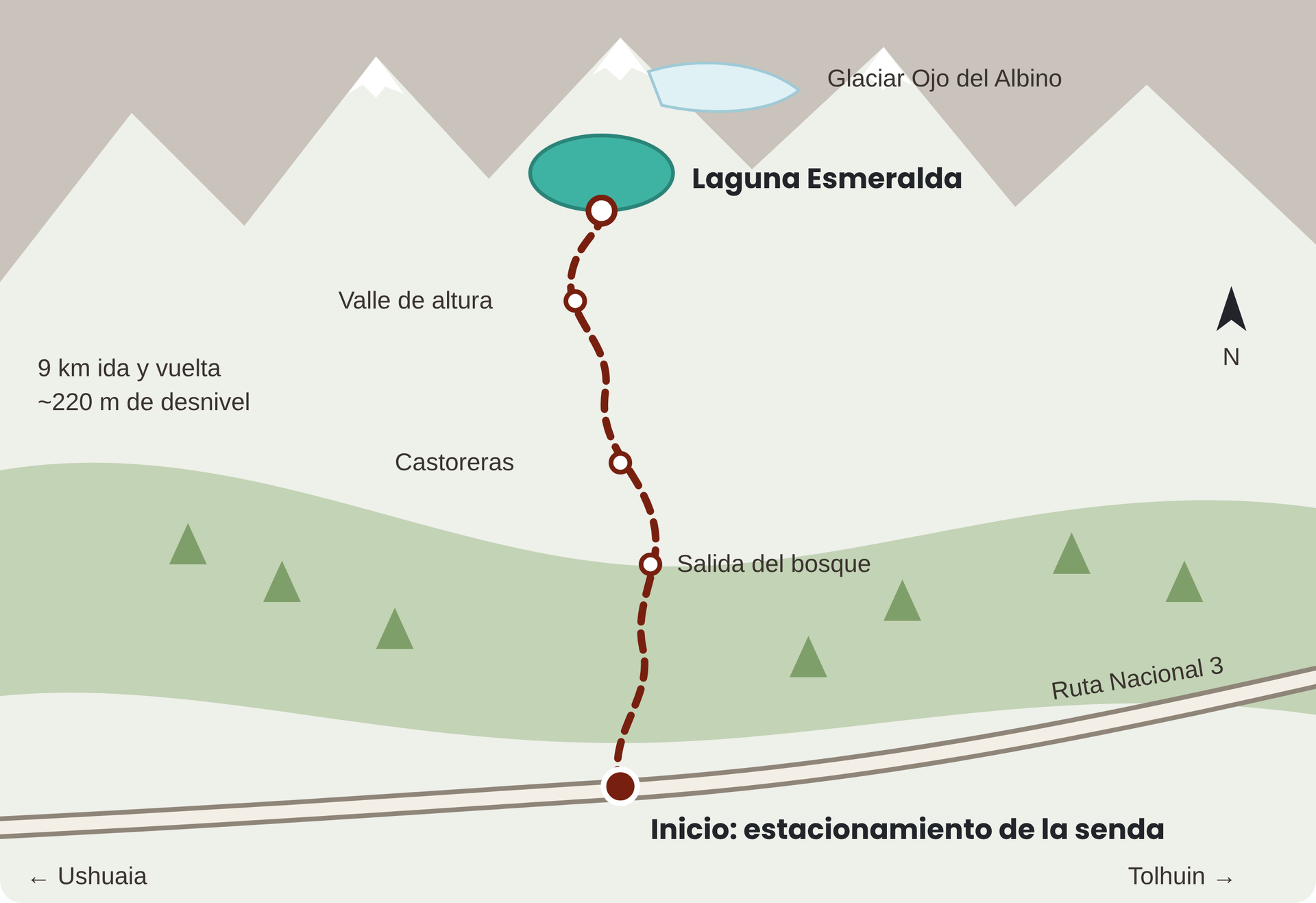
Illustrative map of the trail, not to scale.
How to get there from Ushuaia
- On a guided tour: round-trip hotel pickup is included, so there is nothing else to arrange.
- By car or rental car: about 40 minutes along Route 3 to the trailhead parking area, which is free.
- By shuttle or van: there are services running from downtown to the trailhead.
- By taxi or remís: an option, but agree on a pickup time with the driver, because mobile coverage in the area is limited.
What makes the Laguna Esmeralda hike special?
A hike that packs in many of Ushuaia's landscapes
One of the most surprising things about Laguna Esmeralda is the variety of environments you cross in just a few kilometres.
First, the Andean Patagonian forest. Then the peat bogs and the beaver ponds. Further on, the valley opens up and the mountains of the Andes appear, with their peaks and hanging glaciers. And finally, the lake.
A valley shaped by ice
There is a reason for that variety: the Tierra Mayor Valley was shaped by glaciers that covered this whole area thousands of years ago. The shape of the valley, the peat bogs and the basin where the lake now sits are all traces of that past.
Hiking to Laguna Esmeralda is also a way of reading the landscape.
Beavers: part of the scenery, but not native
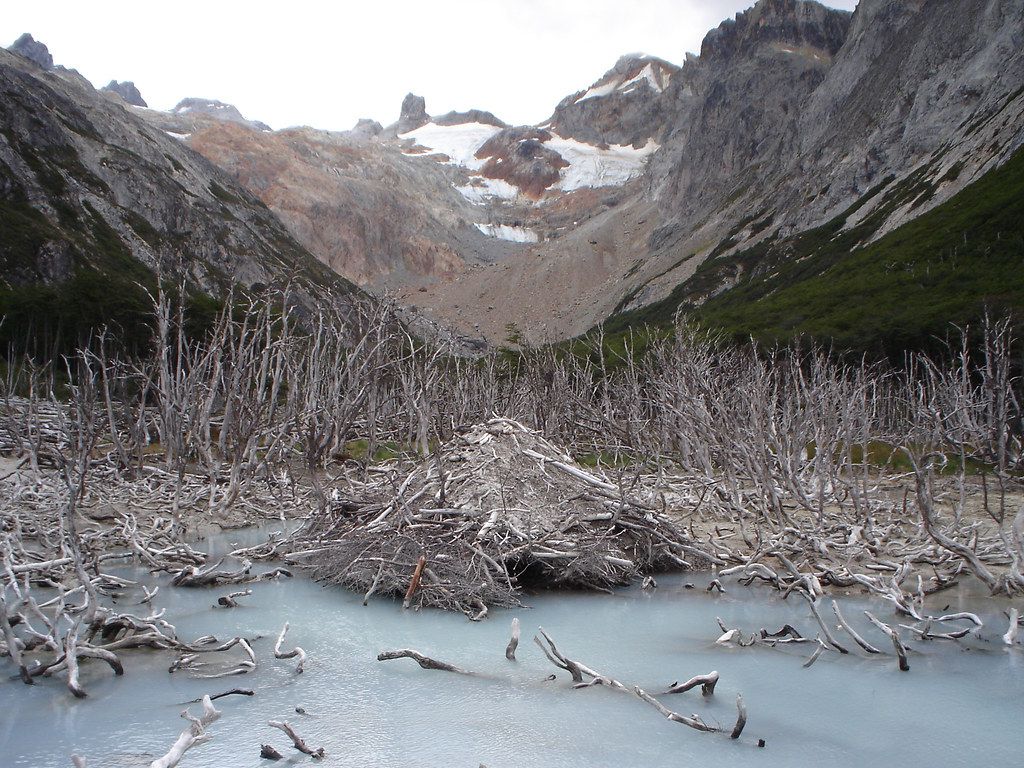
Beaver ponds tend to draw a lot of attention: log dams, artificial ponds and gnawed trees. But there is something important to understand about what you are seeing: the beaver is not native to Tierra del Fuego. It was introduced from North America in the 1940s and, with no natural predators, it spread across the whole island.
Fuegian forests did not evolve with beavers. Lenga does not resprout the way North American trees do, and the areas flooded by the dams end up as dead forest. Many of the patches of bare, grey trees you will see in the valley are the result of this.
What is the trail like?
To picture it better, we can split it into three sections.
Section 1: the lenga forest
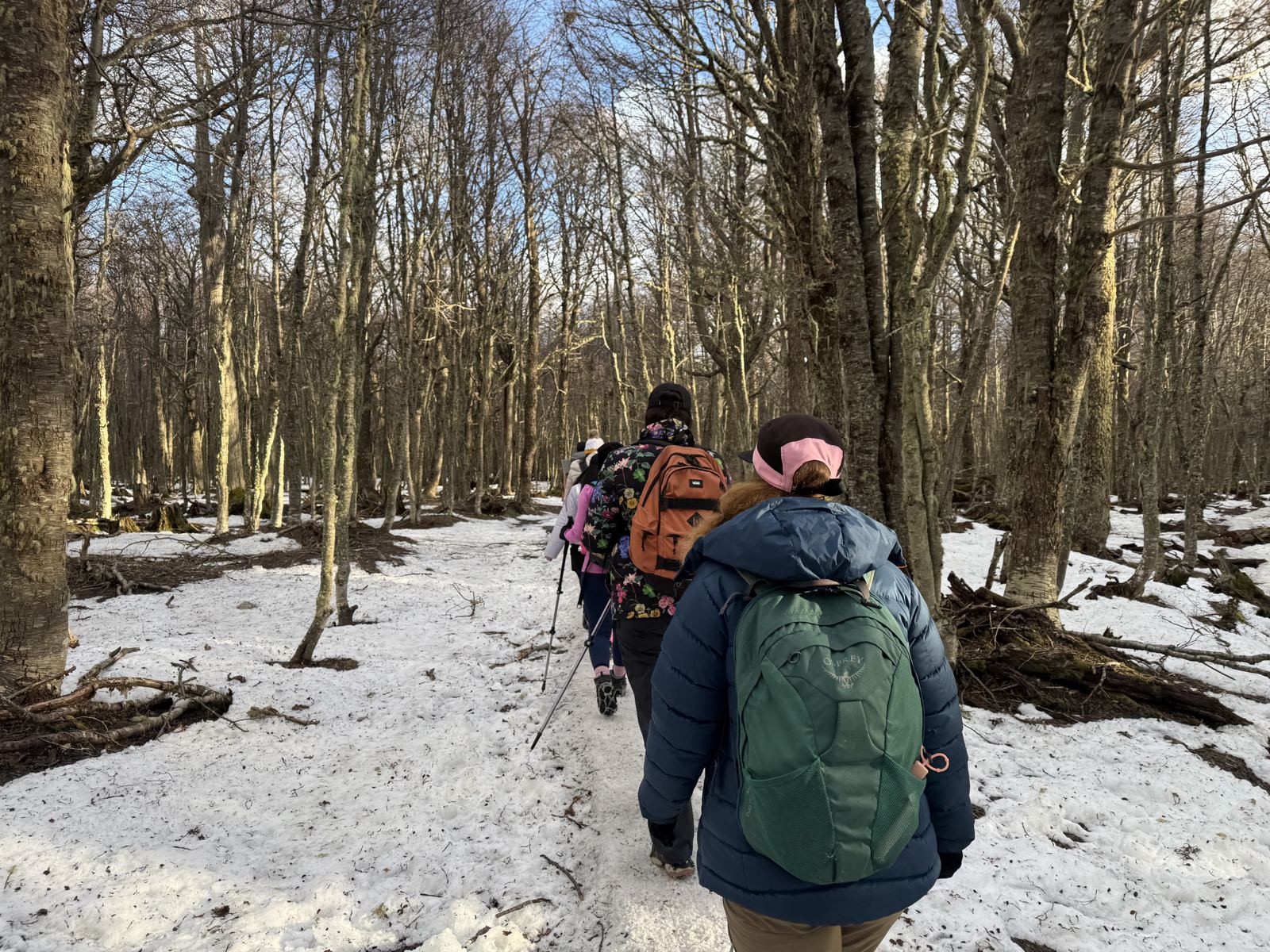
The hike starts inside the forest, with a gentle, steady climb. It is the most sheltered part of the trail and usually the easiest to follow.
This is a forest of lenga, the tree that dominates the slopes around Ushuaia. If you walk quietly, it is common to hear or see native forest birds.
Section 2: the valley, the peat bogs and the boardwalks
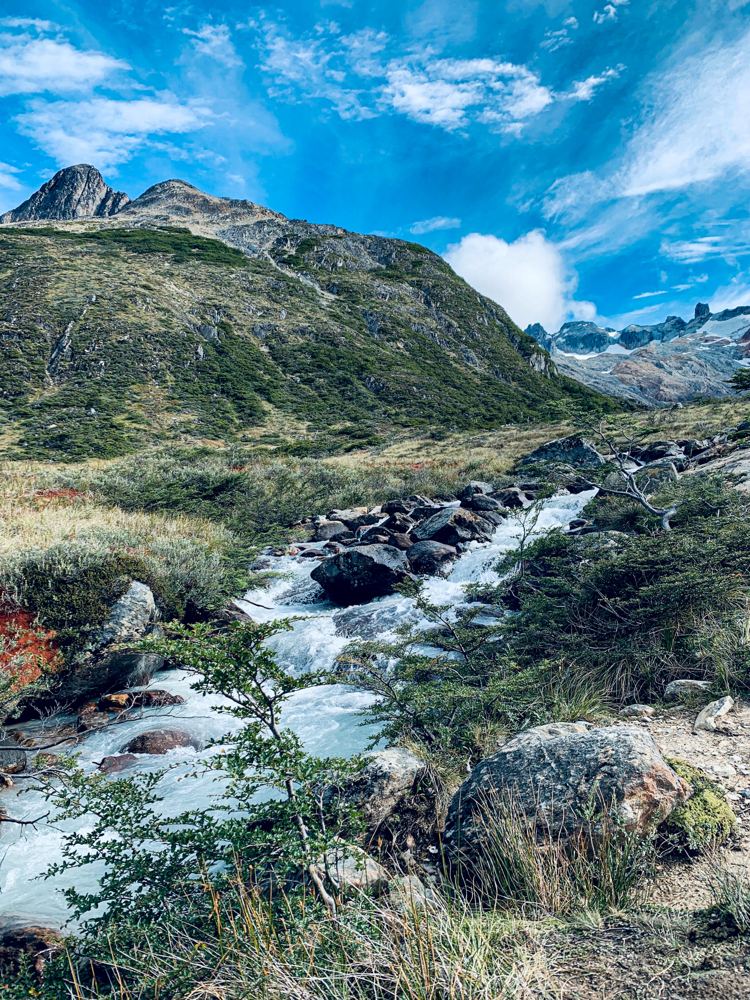
As you leave the forest, the landscape opens up. The valley appears, with its peat bogs and beaver ponds, and you start to see the mountains of the Andes that surround the lake.
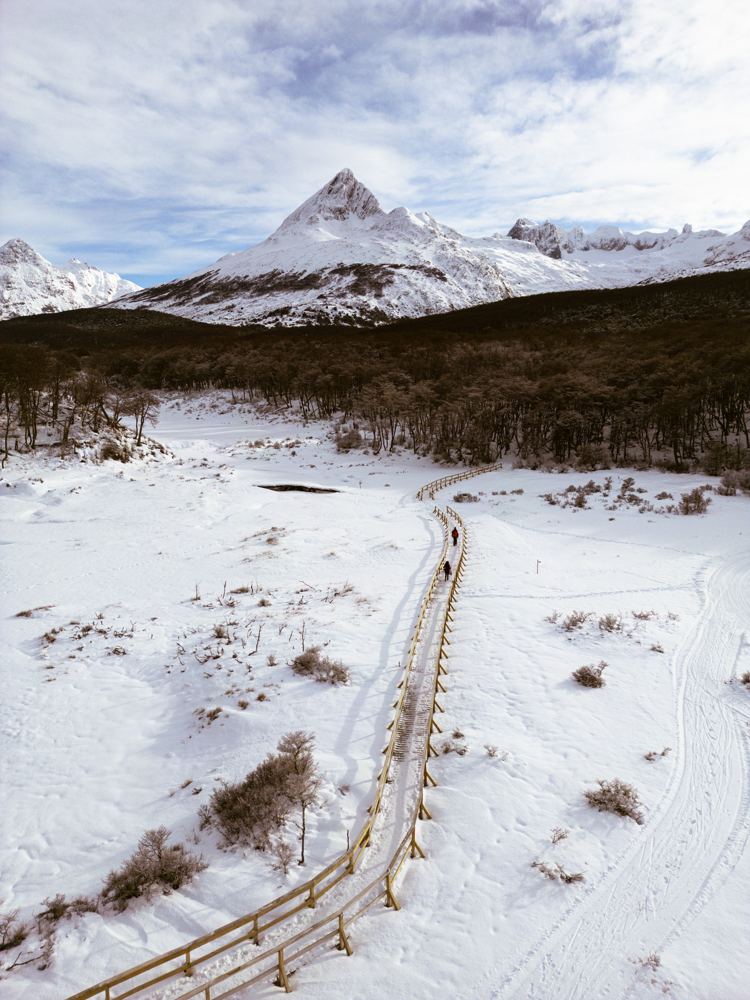
This is where the ground can be muddiest. Over the peat bogs in the valley there are lenga wood boardwalks that help you cross the softest sections.
Section 3: the final climb and the lake
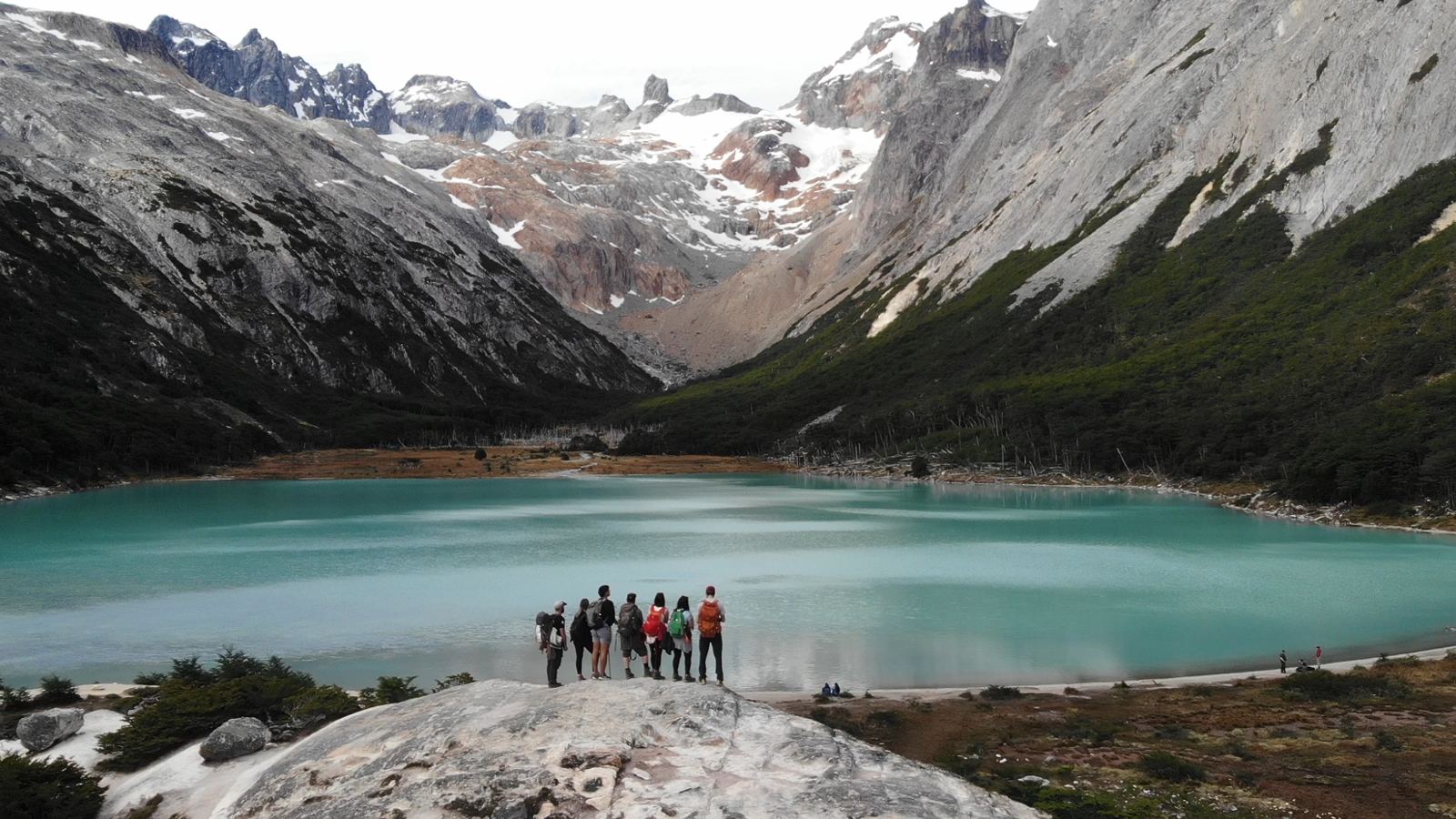
The last section has a steeper climb up to the edge of the lake. When you arrive, the landscape changes all at once: the colour of the water, the mountain walls and, above them, the Ojo del Albino glacier.
The colour of the lake depends on the light, the time of year and the glacial sediment in the water. It never looks exactly the same, and that is part of the experience too.
How does Laguna Esmeralda change through the year?
Hiking Laguna Esmeralda at different times of year is almost like visiting different places. The trail is the same, but the terrain, the colours, the daylight hours and the lake itself change completely.
Summer (December to February)
This is the season of long days: in December there are more than 16 hours of daylight, which gives you plenty of margin to walk without rushing. The weather is mild and dry, and the trail is free of snow. Windy days are common, especially out in the open valley.
The lake is liquid and the forest is at its greenest. It is also the busiest season on the trail.
Autumn (March to May)
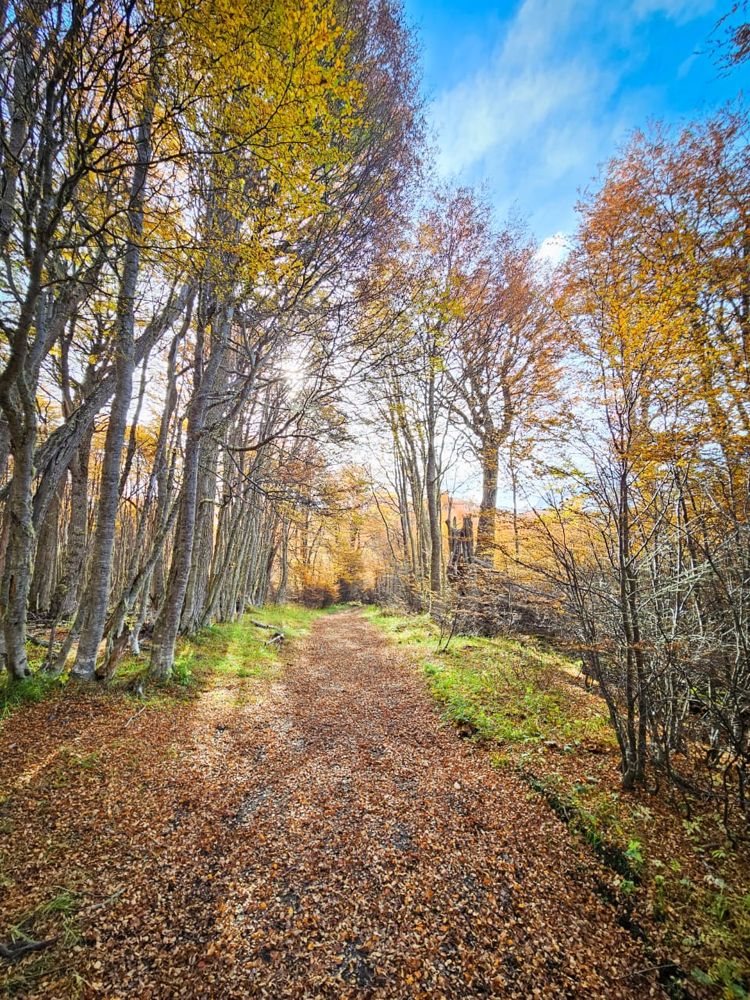
Lenga and ñire trees change colour and the forest turns yellow, orange and red. For many people it is the most photogenic time of the year.
The days get shorter and the first snowfalls arrive towards the end of the season. In May the lake starts to freeze.
Winter (June to September)
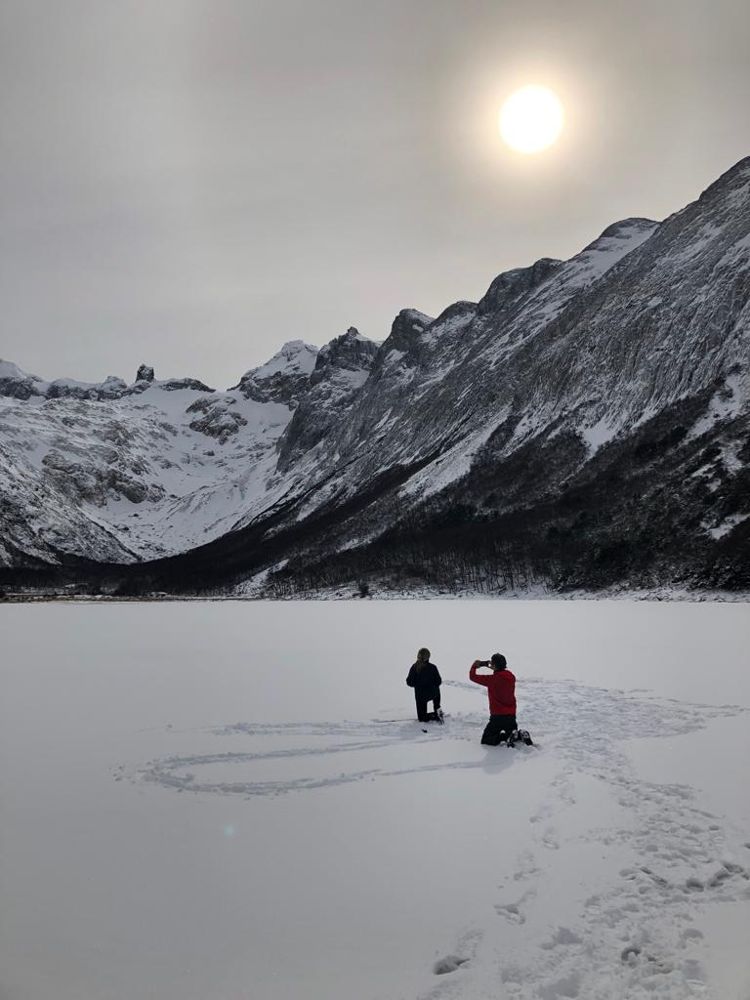
The trail is covered in snow and ice, and from May or June you hike with crampons. The lake freezes completely and you can walk on it: that is the Laguna Esmeralda winter experience, surrounded by an all-white landscape.
Days are short, with around 7 hours of daylight in June, so it is best to start early. With snow, the hike can take longer.
Spring (October and November)
This is the transition season. With the thaw, the trail combines sections of snow, ice and a lot of mud. You may still need crampons, because isolated snowfalls can happen into November or even later.
The lake stays frozen until early November and then the water appears again. Daylight hours grow quickly.
Want to hike it with a guide, in the season you choose? Take a look at the Laguna Esmeralda by hike tour.
The terrain: mud, peat bogs and why conditions matter more than difficulty
If you look up information about Laguna Esmeralda, you will find it described as an "easy" hike by some and "moderate" by others. Both can be true, depending on the day.
The elevation gain is low and the trail has no technical sections. What changes the experience is the state of the ground: the same route can be a relaxed walk on a summer day or a much more demanding outing with deep mud, soft snow, ice or windy days.
Is there a lot of mud on the Laguna Esmeralda trail?
Yes. And it does not only depend on whether it has rained.
Much of the route crosses peat bogs, which work like a sponge and hold water all year round. So even in dry weather there are soft, muddy sections. In spring, with the thaw, the mud increases a lot.
The boardwalks
To cross the softest parts of the valley there are lenga wood boardwalks over the peat bogs. They do two jobs: they make the crossing easier and they protect the peat bog, an ecosystem that takes a very long time to form and is easily damaged by footsteps.
Key tip: always stay on the trail and the boardwalks, even when there is mud. Walking around the puddles widens the trail and damages the peat bog.
What clothing and gear do I need?
Conditions at Laguna Esmeralda can change during the same day, so the key is dressing in layers you can add or remove as you go.
All year round
- Waterproof hiking boots with good grip (not city sneakers)
- Thermal base layer
- Mid layer (fleece or similar)
- Waterproof, windproof jacket
- Hiking trousers (avoid jeans and cotton: once wet they do not dry and make you cold)
- Hat, gloves and neck gaiter
- Sunglasses and sunscreen
- Small backpack with water and something to eat
- Gaiters: highly recommended for mud and snow
Plus, in winter
- Waterproof trousers
- Waterproof gloves and a spare pair
- Thermal socks and a spare pair
- Crampons
- Thermos with a hot drink
If you hike with a tour operator
Clothing and gear requirements for trekking tours are regulated by INFUETUR (Instituto Fueguino de Turismo), the body in charge of overseeing tourism activity in Tierra del Fuego. Licensed operators have to enforce them: if they are not met, the operator may not allow you to join the hike.
On Explore departures we also provide trekking poles and, when the terrain calls for it, crampons.
In winter, on Explore departures we fit crampons before walking on snow and ice.
Can you hike Laguna Esmeralda on your own?
Yes, you can hike the trail on your own. That said, hiking with a guide is not only about safety.
A local guide can turn a walk through spectacular scenery into a much fuller experience: explaining how the valleys were formed, recognising forest species, reading a beaver pond, understanding what a peat bog is, identifying the glaciers that appear in the mountains and explaining how all of these are connected.
On top of that, trail conditions can change a lot with the season and the weather. A guide with local experience can assess those conditions, including the state of the ice in winter, and adapt the route and the gear to what is actually out there that day.
If you go on your own
- Start early, especially in autumn and winter, when daylight is short.
- Check the forecast, paying attention to wind and snowfall.
- Tell someone which route you are doing and what time you expect to be back.
- Stay on the marked trail: in the valley, and with snow, it is easy to lose your bearings.
- In winter, carry crampons and do not walk on the lake unless you have the experience to assess the ice.
- If you bring a dog, keep it on a leash at all times.
- If conditions get worse, turn back: the lake will still be there.
- Take your rubbish with you, including toilet paper if you use the forest.
Laguna Esmeralda, in any season
With every season the landscape, the terrain and the way you experience Laguna Esmeralda change. If you prepare well and know what conditions to expect, it is one of the best ways to understand, in a single walk, what nature at the End of the World is like.
At Explore we run it with small groups, local multilingual guides (Spanish, English, French and Portuguese), hotel pickup and trekking poles included. Crampons when the terrain calls for them.
Frequently asked questions
Is the Laguna Esmeralda hike difficult?
The elevation gain is low, around 220 m, and there are no technical sections. What defines the difficulty are the conditions: mud, snow, ice or windy days can make it considerably more demanding.
How long does the hike take?
4 to 5 hours round trip at an easy pace, with stops. In winter, with snow, it can take longer.
Can you hike it in winter and walk on the frozen lake?
Yes. From May or June you hike with crampons, and the lake stays frozen until early November. When it is completely frozen you can walk on it; it is best to do so with someone experienced who can assess the state of the ice that day.
What is the best time of year to go?
There is no single answer. Summer offers long days and a snow-free trail; autumn, the colours of the forest; winter, the frozen lake; and spring, a landscape in transition, with more mud.
Is there an entrance fee?
No. Access and the trailhead parking area are free.
Do I need a guide?
It is not mandatory. A local guide adds interpretation of the landscape and an assessment of the conditions, especially in winter and spring.
Can children do it?
Yes. On Explore departures, from age 10.
Can I bring a dog?
Yes, but always on a leash. Dogs cannot be off leash.
Are there toilets or services along the trail?
No. If you need to go in the forest, do not leave paper behind: pack it out and take it back to town.
Is there mobile coverage?
With Movistar and Personal there is good coverage along much of the trail, but not in the upper valley or at the lake. With Claro, coverage is very poor.
Laguna Esmeralda or Vinciguerra Glacier: which one should I choose?
Laguna Esmeralda has less elevation gain and is more accessible. Vinciguerra Glacier is a longer, more demanding hike that reaches the glacier itself. If this is your first hike in Ushuaia, Laguna Esmeralda is a great place to start.