Before Ushuaia existed as you know it today, there was a maximum-security prison at the end of the world: the one that locked up murderers like Cayetano Santos Godino, "el Petiso Orejudo" (convicted of killing several children when he was barely a teenager, Argentina's first documented serial killer), and the anarchist Simón Radowitzky.
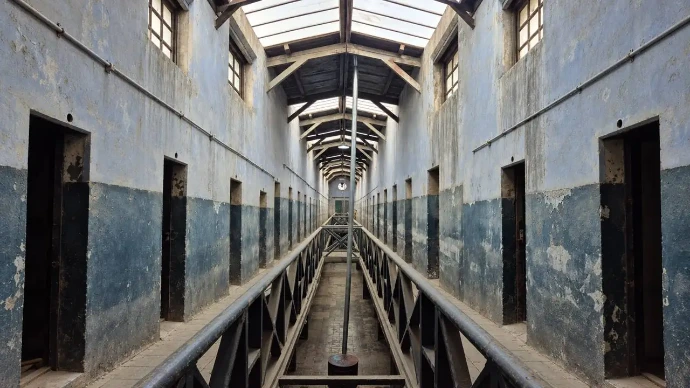
That fact completely changes what you'll see when you walk in: it's not just a museum with cells and old photos. It is, to a large extent, the reason the city exists. The prison ended up building the town around it. And it wasn't even supposed to be a prison.
The original plan wasn't a prison
In 1896 the first group of convicts arrived in Ushuaia aboard the transport ship 1º de Mayo. They didn't come to serve time in a maximum-security prison: they came to settle the land.
Law 3,335, signed by President Julio Argentino Roca in late 1895, called for the founding of a Penal Colony. The logic was typical of the late 19th century: send convicts to the far end of the country so that, through their work, they would help occupy a territory the State barely controlled.
The plan failed. The climate, the isolation and the lack of infrastructure made the colony model unworkable. In 1896, Ushuaia was little more than a handful of wooden houses facing the Beagle Channel.
The turning point: from settling to locking up the most dangerous
Faced with that failure, the State changed strategy. In 1902 the foundation stone was laid for what would truly become an icon: a maximum-security prison, designed by Italian engineer Catello Muratgia, who also became its first director.
That's the real turning point: the prison stopped being thought of as a colony and was explicitly defined as the destination for repeat offenders and the most dangerous inmates. What had been an obstacle for the colony (the isolation, the cold) became its main security advantage: nobody escaped on foot from Ushuaia to anywhere.
Key fact: the prison came to have 5 cell blocks with capacity for 380 inmates. At its peak, it held up to 200 more prisoners than it was designed for.
The invisible engine: how the prison built Ushuaia
Here's the part that surprises visitors the most: much of what Ushuaia is today was built by the prisoners themselves.
Muratgia organized the inmates by trade: bricklayers, carpenters for the prison's own sawmill, foundry workers. That labor force built not only the prison itself (stone, wood, sheet metal) but much of the basic infrastructure that Ushuaia still lacked at the time.
For decades, the prison was the main economic engine of a place that still had no tourism or any other organized industry.
The train: from prisoner transport to tourist ride
One of the facts that surprises visitors the most is the story of the End of the World Train, today one of the most popular excursions in Ushuaia.
That train was born for something else: the prisoners used it to haul the firewood they cut in the forest, and they laid the original tracks themselves. Today's tourist route largely follows that same path.
Key fact: the route you ride today on the scenic train is, to a large extent, the same path the convicts opened more than a century ago cutting firewood for the prison.
So, is it worth visiting?
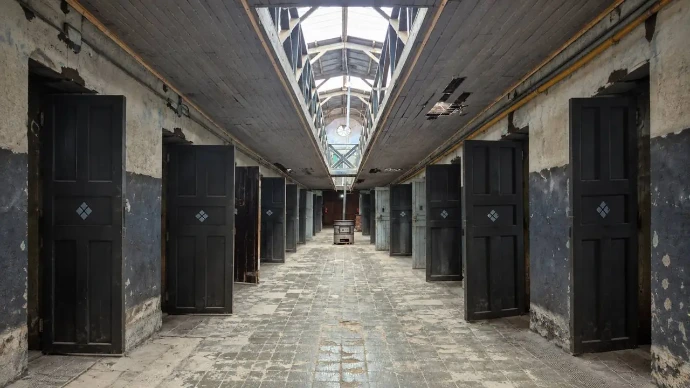
Yes, for one simple reason: it's not a museum about a building, it's a museum about the birth of the city. Inside, you understand why Ushuaia is shaped the way it is, why the train exists, and why this remote city became such a popular destination.
Today the building houses the Maritime and Prison Museum, with the original cell blocks open to visitors, preserved cells and rooms dedicated to the region's maritime and Antarctic history.
Frequently asked questions
Is the Ushuaia Prison still in operation?
No. It stopped operating as a prison in 1947, by order of then-President Juan Domingo Perón. Since 1994 the building has been a museum.
Why did they choose Ushuaia to build a prison?
At first it wasn't meant to be a prison but a penal colony, to populate the south of the country. When that model failed, the isolation and extreme climate became the security advantage of a maximum-security prison.
What does the prison have to do with the End of the World Train?
The train was born as a work tool of the prison itself: the inmates used it to haul the firewood they cut in the forest, and they laid the original tracks themselves.
For opening hours, ticket prices and up-to-date visitor information, check the official website of the Maritime and Prison Museum.
Want to see the Prison in person? Our City Tour stops by the building and tells you its story with a local guide. And if you want more, you can get off and explore it inside for as long as you like.
Written by the Explore Tierra del Fuego team.